Is CBD Good for Arthritis? (2026)
CBD may help some arthritis symptoms like pain, stiffness, or poor sleep by interacting with the body’s endocannabinoid system. Evidence in humans remains limited. Some people report modest relief, while others feel little, depending on the symptom, product type, dose, and individual response.
Key Points:
- CBD may help symptoms, but it’s not a cure: Early research suggests it plays a role in pain and inflammation, but strong human evidence is still limited.
- Results vary widely: Effects depend on the product, dose, and type of arthritis. Topicals target joints, while oils or edibles affect the body more broadly.
- Start with a simple approach: Focus on goals like better sleep or less stiffness. Choose lab-tested products, start low, and give it time to work.
For many people, the biggest challenge isn’t just deciding whether to try CBD. It’s knowing which product actually makes sense for their symptoms and how to use it correctly.
That’s where Elevated comes in. With Montana-grown products and experienced budtenders, we help take the guesswork out of CBD so you can find something that fits your goals, not just what’s on the shelf.
Keep reading to learn what CBD may actually help with, how different product types work, and how to choose the right option for arthritis symptoms.
Is CBD Good for Arthritis?
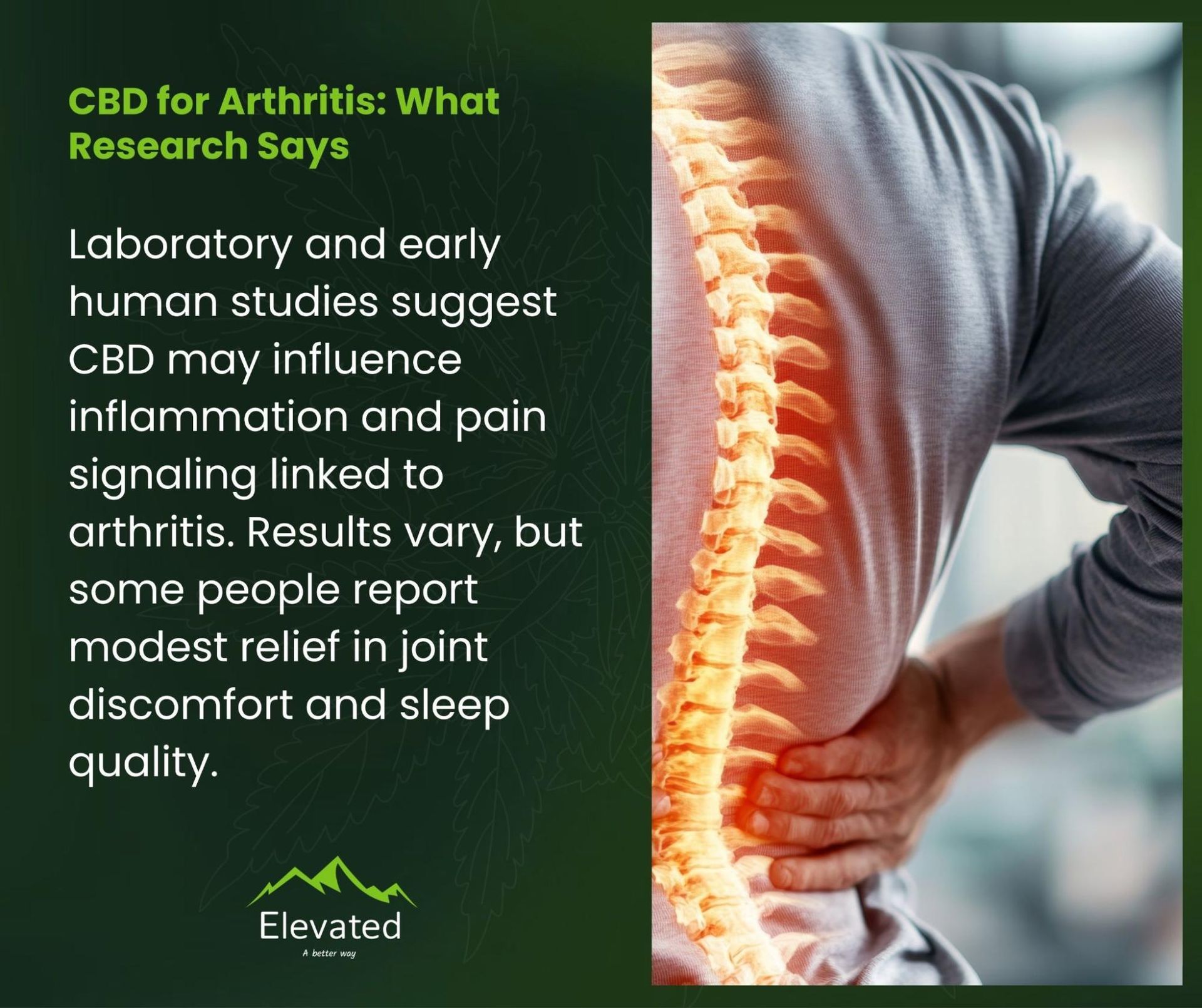
CBD may help some arthritis symptoms, but it is not a cure, and it does not work for everyone.
The research and patient reports to date suggest that CBD may help with pain perception, inflammatory signaling, sleep disruption, and general discomfort in some people with arthritis. But the scientific evidence in humans is still limited, and results vary widely from person to person.
For many arthritis sufferers, the benefits, when they occur, tend to be modest rather than dramatic. People often describe CBD as reducing stiffness, improving sleep, or making daily movement slightly easier, rather than eliminating pain.
Where CBD May Help
Some arthritis patients report improvements in areas like:
- Joint discomfort and stiffness
- Inflammation-related soreness
- Sleep problems caused by pain
- General tension or stress that worsens pain perception
Part of the interest comes from how CBD interacts with the body’s endocannabinoid system, a network of receptors involved in regulating pain, inflammation, sleep, and immune activity. Early laboratory and animal studies suggest that CBD may modulate inflammatory pathways implicated in arthritis.
But translating those findings into consistent results in humans has proven more complicated.
Arthritis: Where CBD May Not Help
CBD is often marketed as a powerful pain solution, but the reality is more nuanced.
Some people try CBD and feel very little difference, especially if they are expecting the kind of rapid relief they might get from a traditional pain reliever.
CBD is also not known to reverse joint damage or stop arthritis progression. Even when it helps symptoms, it should be viewed as a potential tool for symptom management rather than a treatment for the underlying disease.
Why CBD Arthritis Experiences Vary So Much
One of the biggest reasons people get different results is that several variables influence whether CBD works at all:
- Type of arthritis: Osteoarthritis, rheumatoid arthritis, and inflammatory arthritis may respond differently.
- Product type: Topical creams, oils, and edibles affect the body in different ways.
- Dose and consistency; Many people try a product once or twice and stop before giving it a fair trial.
- CBD vs full-spectrum products: Some products contain small amounts of THC that may contribute to perceived relief.
This is why two people can try CBD for arthritis and walk away with completely different opinions: one saying it helped, and the other saying it did nothing.
Why CBD Might Help Arthritis Symptoms
Arthritis pain is not caused by just one problem. It typically results from a combination of joint inflammation, nerve signaling, tissue damage, and immune activity. In osteoarthritis, cartilage gradually wears down, and joints become irritated. In autoimmune diseases such as rheumatoid arthritis, the immune system attacks joint tissue, resulting in ongoing inflammation.
CBD has attracted medical attention because it interacts with a biological system involved in several of those processes: the endocannabinoid system (ECS).
The Endocannabinoid System and Joint Pain
The endocannabinoid system is a network of receptors found throughout the body, including in:
- immune cells
- nerve pathways that transmit pain
- joint and connective tissues
- the brain and spinal cord
These receptors help regulate functions such as pain perception, inflammation, sleep, mood, and immune responses.
CBD does not directly bind to these receptors in the same way THC does. Instead, it appears to influence how the system regulates inflammatory signals and pain communication. That interaction is one reason researchers continue studying CBD as a possible tool for inflammatory conditions like arthritis.
What Laboratory Research Shows
Much of the early enthusiasm for CBD in arthritis stems from laboratory and animal studies.
In these studies, CBD has been shown to:
- reduce inflammatory signaling molecules
- influence immune cells involved in joint inflammation
- affect synovial fibroblasts, which play a role in rheumatoid arthritis inflammation
- reduce pain-related responses in animal models
These findings suggest CBD may have anti-inflammatory and pain-modulating properties, which help explain why researchers remain interested in its potential for joint conditions.
But laboratory findings do not always translate directly to real-world outcomes.
Why Human Evidence Is Still Limited
The biggest challenge in understanding CBD for arthritis is that human studies are still relatively small and inconsistent.
Many studies so far have limitations such as:
- small participant groups
- short study durations
- reliance on self-reported pain outcomes
- varying CBD doses and formulations
- mixed cannabinoid products rather than pure CBD
Because of this, most medical organizations currently describe the evidence as promising but inconclusive.
That does not mean CBD has no potential. It simply means the science has not yet reached the point where doctors can confidently say it works reliably for arthritis.
Why Some People Still Report Relief
Even with limited clinical evidence, many arthritis sufferers report noticeable improvements in certain areas when using CBD.
In real-world use, people often describe benefits such as:
- Reduced stiffness during daily movement
- Better sleep when pain usually disrupts rest
- less awareness of low-level joint discomfort throughout the day
In other words, the improvements are functional rather than dramatic. Instead of eliminating pain entirely, CBD may make symptoms more manageable for some people.
Why Others Feel Nothing at All
Just as important, many people try CBD and experience little to no change.
Several factors can influence this outcome:
- the type of arthritis involved
- whether inflammation is active or minimal
- the product type used (topical vs oral)
- the dose and consistency of use
- whether the product contains other cannabinoids such as THC
These variables explain why CBD can produce very different experiences between individuals, even when they are dealing with similar symptoms.
What Arthritis Symptoms CBD May Actually Help With
CBD is often discussed as a general “pain reliever,” but arthritis sufferers usually care about specific symptoms, not vague promises. Based on current research and real-world reports, CBD may help with some aspects of arthritis more than others.
Joint Pain and Daily Discomfort
Some people with arthritis report that CBD helps reduce the intensity of everyday joint discomfort, particularly the dull, persistent soreness that builds during the day.
CBD may influence pain signaling through the body’s endocannabinoid system, which helps regulate how the brain and nerves interpret pain signals. Early research suggests CBD may also affect inflammatory pathways linked to arthritis-related pain.
However, it’s important to set realistic expectations. When CBD helps, many users describe the effect as “taking the edge off” pain rather than eliminating it completely.
Stiffness and Morning Mobility
Morning stiffness is one of the most common arthritis complaints. Joints may feel tight or slow when first waking up, especially in the hands, knees, and hips.
Some people report that CBD products, particularly topical creams applied directly to joints, help reduce localized stiffness and soreness, making it easier to start the day or move through daily activities.
The effect is likely related to CBD’s potential influence on local inflammation and nerve sensitivity, though more human research is still needed.
Sleep Disruption Caused by Pain
For many arthritis sufferers, the biggest problem is not just pain during the day but poor sleep at night.
Joint pain can make it difficult to fall asleep or stay asleep, especially when changing positions in bed. Some people find CBD helpful because it may promote relaxation and sleep quality, indirectly improving how manageable arthritis feels the next day.
In these cases, CBD may not be directly reducing joint inflammation but may still improve overall comfort by supporting better rest.
Inflammation and Swelling
Laboratory studies suggest CBD may influence certain inflammatory signaling molecules involved in arthritis. This has led researchers to explore whether CBD could reduce joint inflammation.
However, the strongest evidence so far comes from preclinical and animal research, and human studies are still limited. That means CBD should not be viewed as a proven anti-inflammatory treatment for arthritis, even though it may help some people feel better symptomatically.
When CBD May Not Help
CBD does not appear to:
- repair damaged cartilage
- reverse joint degeneration
- Stop autoimmune arthritis progression
Even when CBD improves comfort or sleep, it should be considered a symptom management tool, not a treatment for the underlying disease.
Expert tip: results vary widely, and the type of product used can make a significant difference.
Which Type of CBD Works Best for Arthritis?
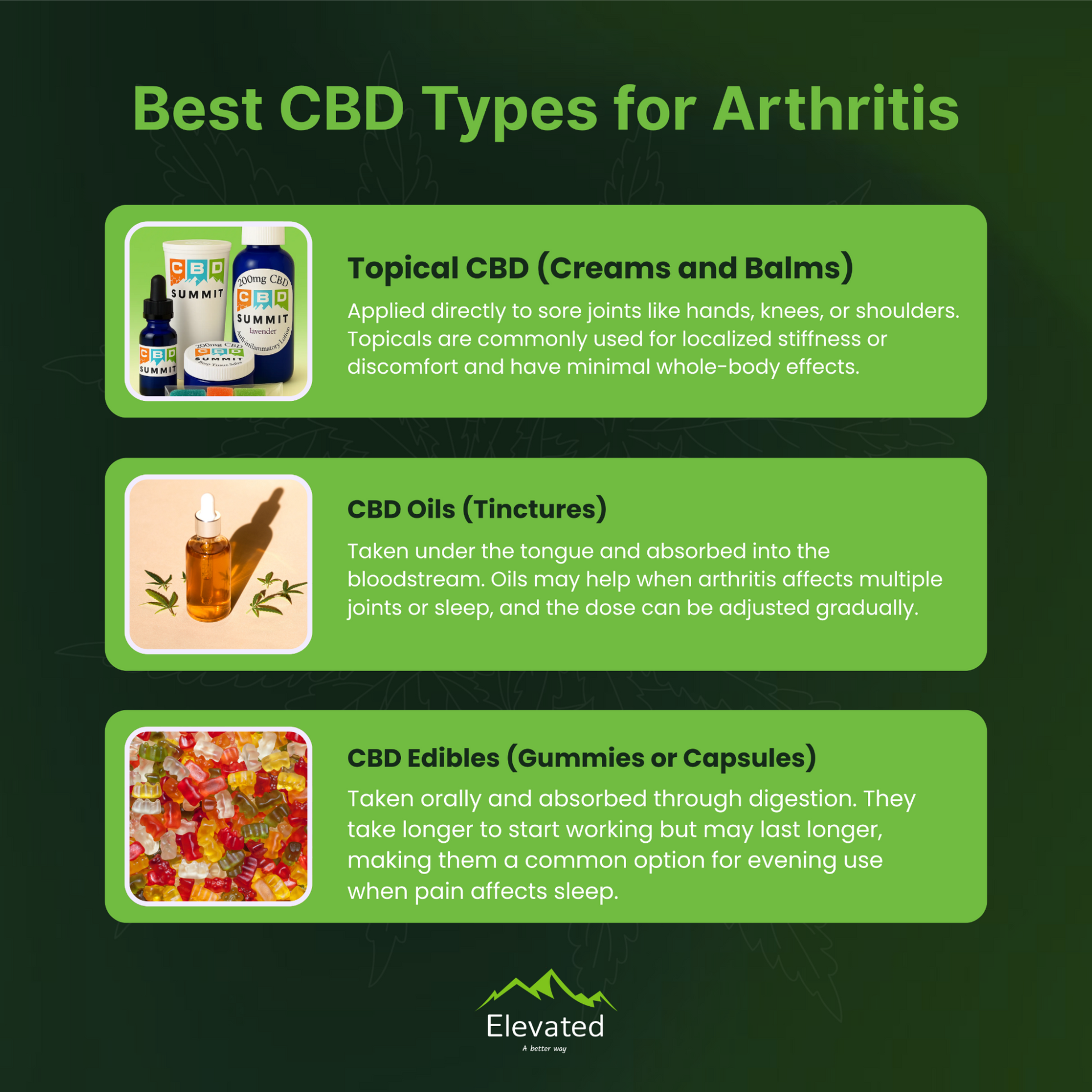
Not all CBD products work the same way. The type of CBD you choose can affect how quickly it works, how long the effects last, and which arthritis symptoms it may help most.
Most people with arthritis end up considering three main options: topicals, oils (tinctures), and edibles. Each works differently in the body.
Topical CBD (Creams, Balms, and Lotions)
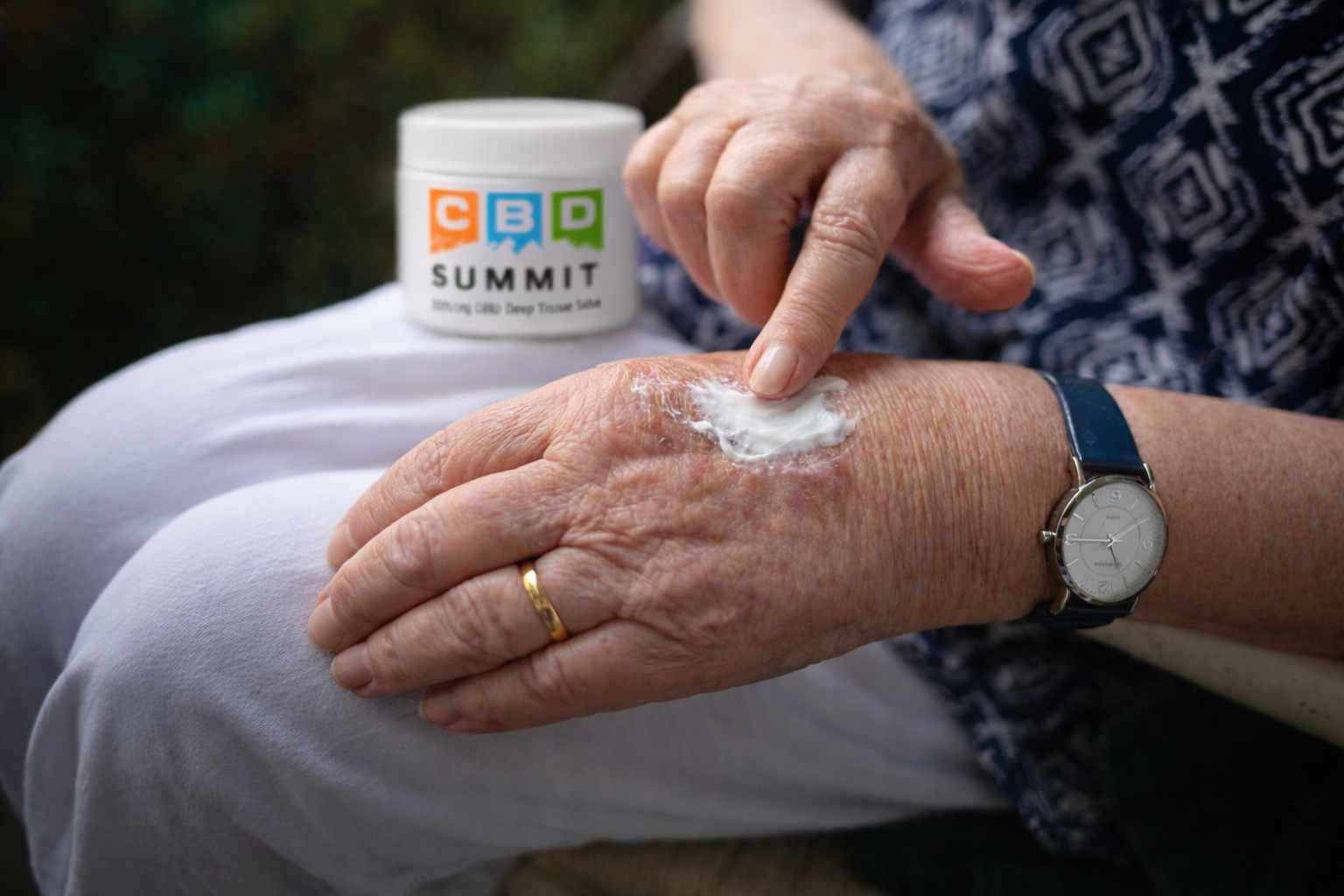
Topical CBD products are applied directly to the skin over painful joints, such as the hands, knees, shoulders, or hips.
This makes them one of the most common starting points for arthritis because they target localized discomfort.
Possible advantages:
- applied directly to sore joints
- minimal systemic absorption
- low risk of whole-body side effects
- may help with stiffness and localized soreness
Many arthritis patients prefer topical agents for small joints such as the fingers, wrists, or knees because they can apply the product directly to the site of symptoms.
However, there remains debate about how deeply CBD penetrates joint tissue, so relief may arise from effects on surrounding nerves and inflammation rather than on deep joint structures.
CBD Oils and Tinctures
CBD oils are taken under the tongue (sublingually), where they are absorbed into the bloodstream.
This allows CBD to affect the entire body rather than a single joint.
People sometimes choose oils when arthritis symptoms involve:
- multiple joints
- widespread inflammation
- sleep problems related to pain
Oils typically take 15–45 minutes to start working, but the effects may last longer than topical products.
Because the dose can be adjusted drop by drop, oils also make it easier to experiment with dosage.
CBD Gummies and Edibles
Edibles like gummies or capsules are another common option.
They pass through the digestive system before entering the bloodstream, which means:
- Effects take longer to start (often 45–90 minutes)
- The dose is fixed per serving
- Effects may last longer once they begin
Some arthritis sufferers use edibles in the evening when pain interferes with sleep or nighttime comfort.
The downside is that digestion can reduce absorption predictability, which may explain why some people experience little effect from gummies while others notice improvement.
CBD Isolate vs Full-Spectrum Products
Another important distinction is what else is inside the product.
CBD products generally fall into three categories:
- CBD isolate: Contains only CBD with no other cannabinoids.
- Broad-spectrum CBD: Contains multiple cannabinoids but typically removes THC.
- Full-spectrum CBD: Contains CBD plus small amounts of other cannabinoids, including trace THC.
Some users report that full-spectrum products feel more effective, possibly because cannabinoids and plant compounds interact together in what is sometimes called the “entourage effect.”
However, full-spectrum products may expose users to small amounts of THC, which can matter for people concerned about drug testing or sensitivity to THC.
Which Option Makes the Most Sense?
For many arthritis sufferers, the best starting approach depends on the type of symptom they want to improve:
- One or two sore joints: topical CBD
- Widespread discomfort or sleep issues: oils or edibles
- Sensitive to THC or drug testing: isolate or broad-spectrum products
Is CBD Safe for Arthritis? Risks, Medications, and THC Concerns
For many people with arthritis, especially older adults, the biggest question isn’t just whether CBD works. It’s whether it’s safe to try, particularly if they already take medications.
In general, CBD is considered well tolerated for many adults, but it still comes with important cautions. Understanding these risks helps people make more informed decisions before experimenting with CBD for arthritis symptoms.
Medication Interactions
One of the most important safety considerations is how CBD interacts with other medications.
CBD is processed by liver enzymes that are also responsible for breaking down many prescription drugs. Consequently, CBD can affect how some medications are processed in the body, which may change their effects.
This is especially relevant for people taking medications such as:
- blood thinners
- certain pain medications
- anti-seizure drugs
- some antidepressants
- medications used for autoimmune conditions
For anyone managing arthritis alongside other health conditions, it’s a good idea to talk with a healthcare professional before adding CBD, particularly if multiple prescriptions are involved.
Possible Side Effects of using CBD for arthritis
CBD is generally considered non-intoxicating, but it can still cause side effects in some people.
Reported side effects may include:
- fatigue or drowsiness
- digestive discomfort
- dry mouth
- changes in appetite
These effects tend to be dose-dependent, meaning they are more likely when larger amounts are used.
For people trying CBD for the first time, starting with a low dose and increasing gradually can help minimize these issues.
THC Exposure and Drug Testing
Many people choose CBD because it does not produce the “high” associated with cannabis. However, some CBD products, especially full-spectrum products, contain small amounts of THC.
While these amounts are usually very low, they may still matter for:
- people sensitive to THC
- those who undergo workplace drug testing
- individuals who want to avoid psychoactive effects entirely
For these situations, CBD isolate or broad-spectrum products may be a safer option.
Still Wondering if CBD Could Help Your Arthritis?

CBD may help with symptoms like stiffness, discomfort, or sleep, but results can vary. The key is finding the right product, using it consistently, and setting realistic expectations.
If you’re not sure where to start, talking it through with someone who understands the products can make the process a lot easier.
Stop by your nearest Elevated location and connect with a budtender. We’ll help you find an option that fits your goals so you can move forward with confidence.
Disclaimer:
This article is for informational and educational purposes only and is not intended as medical advice, diagnosis, or treatment. CBD products are not approved by the U.S. Food and Drug Administration to treat or cure arthritis. Always consult a qualified healthcare professional before starting CBD, especially if you take prescription medications or have an underlying medical condition.
References
- Arthritis Foundation. (2023). CBD for arthritis pain: What you should know. https://www.arthritis.org/health-wellness/healthy-living/managing-pain/pain-relief-solutions/cbd-for-arthritis-pain
- Frane, N., et al. (2022). Cannabidiol as a treatment for arthritis and joint pain: An exploratory cross-sectional study. Journal of Cannabis Research, 4(1). https://doi.org/10.1186/s42238-022-00114-9
- Lowin, T., Tingting, Y., Dettmer-Wilde, K., & Straub, R. H. (2020). Cannabidiol (CBD): A killer for inflammatory rheumatoid arthritis synovial fibroblasts. Cell Death & Disease, 11(8). https://doi.org/10.1038/s41419-020-02873-1
- VanDolah, H. J., Bauer, B. A., & Mauck, K. F. (2019). Clinicians’ guide to cannabidiol and hemp oils. Mayo Clinic Proceedings, 94(9), 1840–1851. https://doi.org/10.1016/j.mayocp.2019.01.003
- National Center for Complementary and Integrative Health. (2023). Cannabis (marijuana) and cannabinoids: What you need to know. https://www.nccih.nih.gov/health/cannabis-marijuana-and-cannabinoids-what-you-need-to-know
- Harvard Health Publishing. (2023). Does CBD help with arthritis pain? https://www.health.harvard.edu/blog/does-cbd-help-with-arthritis-pain-2020050419848
Recent Posts