Cannabis Concentrates Explained: Types & How to Choose
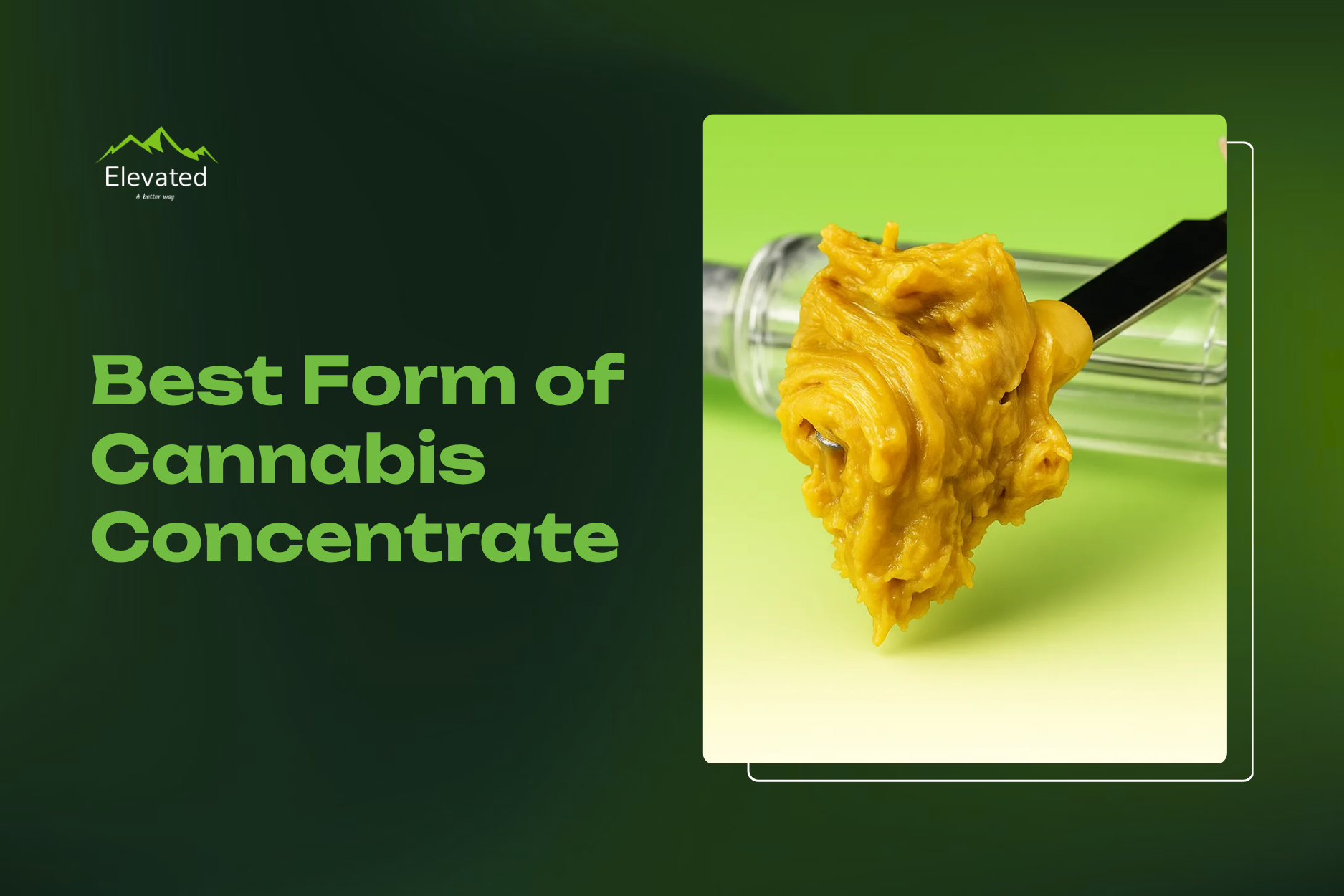
Cannabis concentrates are potent extracts made from the resin-rich trichomes of the cannabis plant. They contain concentrated cannabinoids like THC and aromatic terpenes, making them stronger than traditional flower. Common forms include rosin, live resin, wax, shatter, distillate, and hash.
Key Points
- What they are: Concentrated cannabis extracts made by isolating resin rich in cannabinoids and terpenes, resulting in higher potency than flower.
- Types vary widely: Rosin, live resin, wax, shatter, distillate, and hash differ by extraction method, texture, and plant material.
- How they’re used: Vaped, dabbed, infused, or added to flower. Start small since concentrates are significantly stronger.
For many people, the hardest part isn’t understanding what concentrates are. It’s figuring out which type actually fits their experience level and goals without overdoing it.
That’s where Elevated comes in. With Montana-grown products and experienced budtenders, we help break down concentrates in a way that’s easy to understand, so you can choose based on how you want to feel, not just what sounds strongest.
Keep reading to learn how concentrates work, how different types compare, and how to choose the right option with confidence.
What Are Cannabis Concentrates?
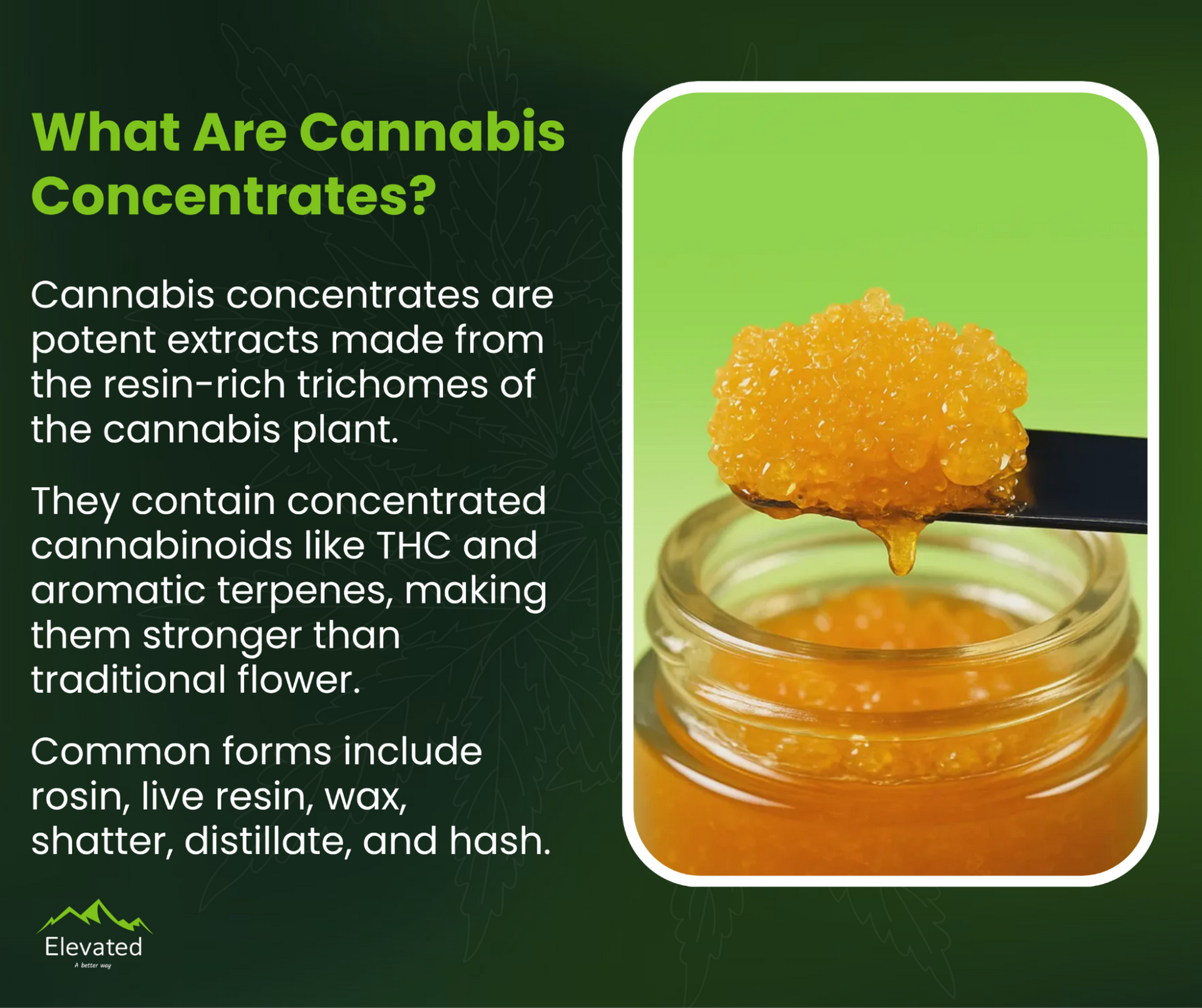
Cannabis concentrates are products made by extracting the most active compounds from the cannabis plant’s resin. That resin comes from tiny crystal-like structures on the plant called trichomes, which contain the majority of the plant’s cannabinoids (like THC and CBD) and terpenes, the aromatic compounds responsible for flavor and scent.
Instead of consuming the entire cannabis flower, concentrates isolate these resin-rich compounds and remove much of the plant material. The result is a product that contains a far higher concentration of cannabinoids and terpenes than traditional cannabis flower.
Because of this concentration process, cannabis concentrates are typically much stronger than standard cannabis flower. While flower often ranges from around 10–35% THC at Elevated, many concentrates contain significantly higher cannabinoid levels. This potency is one of the main reasons concentrates have become popular among both experienced consumers and people seeking more efficient cannabis products.
You may also hear concentrates referred to by names like dabs, extracts, cannabis oil, or hash. These terms generally describe products that come from the same core idea: capturing and concentrating the cannabis plant’s most potent resin to create a stronger, more flavorful form of cannabis.
Why Are Cannabis Concentrates So Much Stronger?
One of the first things people notice about cannabis concentrates is how much stronger they are than traditional flower. That strength comes from the way concentrates are made: by isolating the most active compounds from the plant and removing most of the remaining plant material.
Here’s what makes concentrates more potent.
Concentrated Cannabinoids
Cannabis flower contains cannabinoids like THC and CBD, but they’re mixed with plant fibers, chlorophyll, and other material. Concentrates remove much of that extra plant matter and keep the resin that holds the cannabinoids. The result is a product with a much higher cannabinoid concentration.
More Resin, Less Plant Material
The resin in cannabis, produced by the plant’s trichomes, contains the majority of cannabinoids and terpenes. When this resin is extracted and concentrated, the final product becomes far more potent than the original flower.
Higher THC Levels
Because concentrates focus on the resin-rich part of the plant, their THC levels are often significantly higher than flower. While cannabis flower commonly falls between 10–35% THC at Elevated, many concentrates contain much higher
cannabinoid concentrations, which means smaller amounts can produce stronger effects.
Potency Requires a Different Approach
That strength is why many experienced consumers appreciate concentrates; they can deliver stronger effects with smaller amounts. At the same time, beginners should approach them carefully. Starting with small doses and lower-intensity formats helps people understand how concentrates affect them before trying stronger products.
Why Are There So Many Types of Cannabis Concentrates?
If you’ve ever looked at a concentrate menu, you’ve probably noticed how many names there are: wax, shatter, crumble, rosin, live resin, hash, distillate, and more. For beginners, this can make the category feel confusing. The reason is that concentrate names often describe different things at the same time.
Here are the three main reasons there are so many varieties.
Different Extraction Methods
Some concentrates are created using solvents like butane, propane, ethanol, or CO₂ to separate cannabinoids and terpenes from the plant. Others use solventless methods, such as heat, pressure, ice water, or mechanical separation. These different processes naturally produce different types of concentrates.
Different Textures and Consistencies
Many concentrate names actually refer to how the final product looks or feels, not just how it was made. For example:
- Shatter is brittle and glass-like
- Wax or budder is soft and creamy
- Crumble has a dry, crumbly texture
In some cases, these textures can come from similar extraction methods but different finishing or whipping techniques.
Different Source Material
Another factor is the type of cannabis used during extraction. Some concentrates are made from cured flower, while others use fresh-frozen plants to preserve more terpenes and aroma. Products like live resin and live rosin fall into this category.
The key takeaway is that the many names for concentrates don’t necessarily mean completely different products. In many cases, they simply describe variations in extraction method, plant material, or texture, which can influence flavor, potency, and how easy the product is to handle.
Solvent vs. Solventless Cannabis Concentrates
One of the biggest ways concentrates are categorized is by how the resin is extracted from the plant. In general, concentrates fall into two main groups: solvent-based and solventless. Understanding the difference helps explain why certain concentrates look, taste, or cost the way they do.
Solvent-Based Concentrates
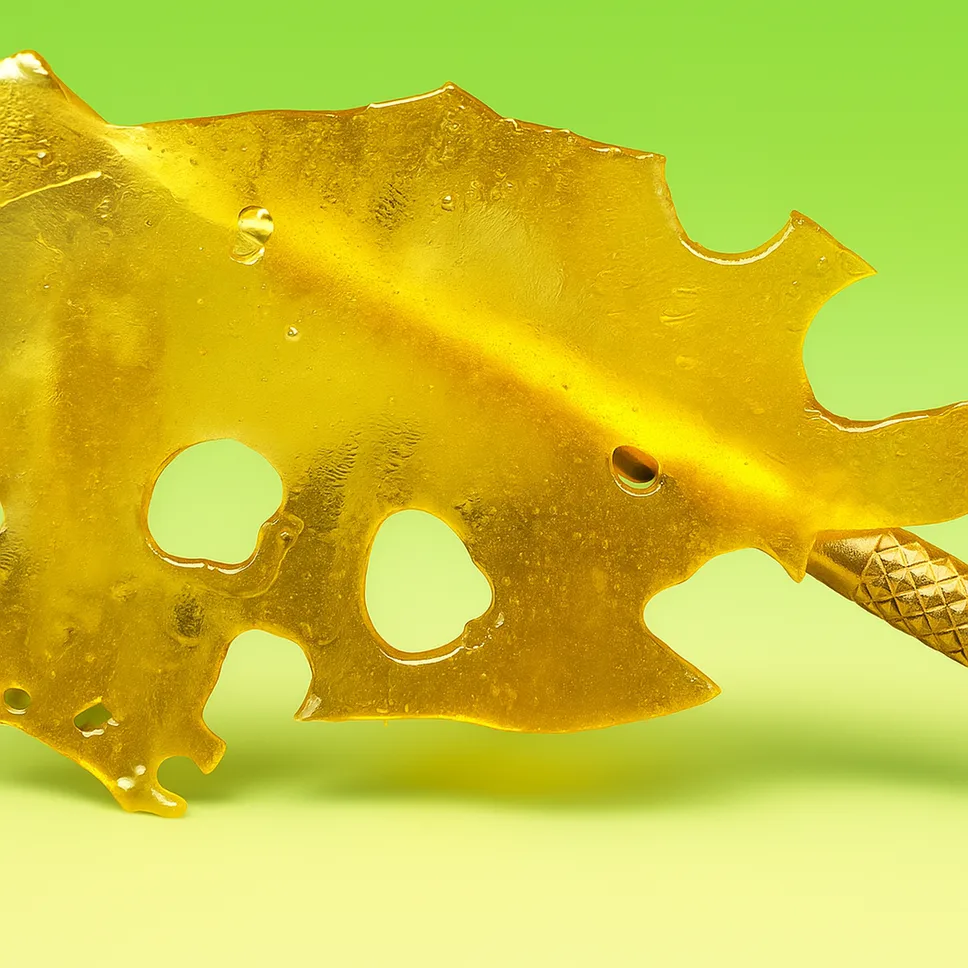
Product Featured: Shatter - 1g Hybrid - Alien OG
Solvent-based concentrates are made by using a substance, often butane, propane, ethanol, or CO₂, to separate cannabinoids and terpenes from the cannabis plant. The solvent dissolves the resin compounds, which are then refined and purged to remove the solvent, leaving behind the concentrated extract.
This process can produce several popular concentrate types, including:
- Shatter
- Wax or budder
- Crumble
- Live resin
- Distillate
Modern extraction facilities use closed-loop systems designed to safely control pressure, temperature, and solvent recovery. When performed in regulated labs and properly purged, these methods can produce clean, terpene-rich concentrates.
Solventless Concentrates
Solventless concentrates rely on mechanical processes rather than chemical solvents to separate the resin from the plant. Instead of dissolving cannabinoids, these methods use heat, pressure, ice water, or agitation to collect the trichomes.
Common solventless concentrates include:
- Rosin: made by pressing cannabis with heat and pressure
- Bubble hash: created by separating trichomes using ice water and filtration
- Dry sift or kief: collected by mechanically sifting the plant material
Many people prefer solventless products because they use fewer processing inputs, though both solvent-based and solventless methods can produce high-quality concentrates when done properly.
Why the Difference Matters
For consumers, the solvent vs. solventless distinction usually affects a few key factors:
- Flavor and terpene expression
- Texture and consistency
- Price and availability
- Personal preference around extraction methods
Neither category is automatically better than the other. The quality of the starting plant material, the extraction process, and the final refinement often matter more than whether a concentrate is solvent-based or solventless.
Live Resin vs. Live Rosin: What’s the Difference?
Two of the most commonly confused cannabis concentrates are live resin and live rosin. The names sound nearly identical, but the key difference comes down to how the resin is extracted from the plant.
Both products start with fresh-frozen cannabis plants instead of dried and cured flower. Freezing the plant immediately after harvest helps preserve more of the plant’s natural terpenes, which contribute to aroma, flavor, and overall character.
Where they differ is the extraction method.
Live Resin
Live resin is produced using a solvent-based extraction process, typically with butane or propane in a controlled, closed-loop system. The solvent pulls cannabinoids and terpenes from the frozen plant material, creating a highly aromatic concentrate.
Because of this process, live resin is often known for:
- Strong terpene expression
- Rich aroma and flavor
- Wide availability across different textures such as sauce, badder, or sugar
Live resin products are commonly used in dab concentrates and vape cartridges.
Live Rosin
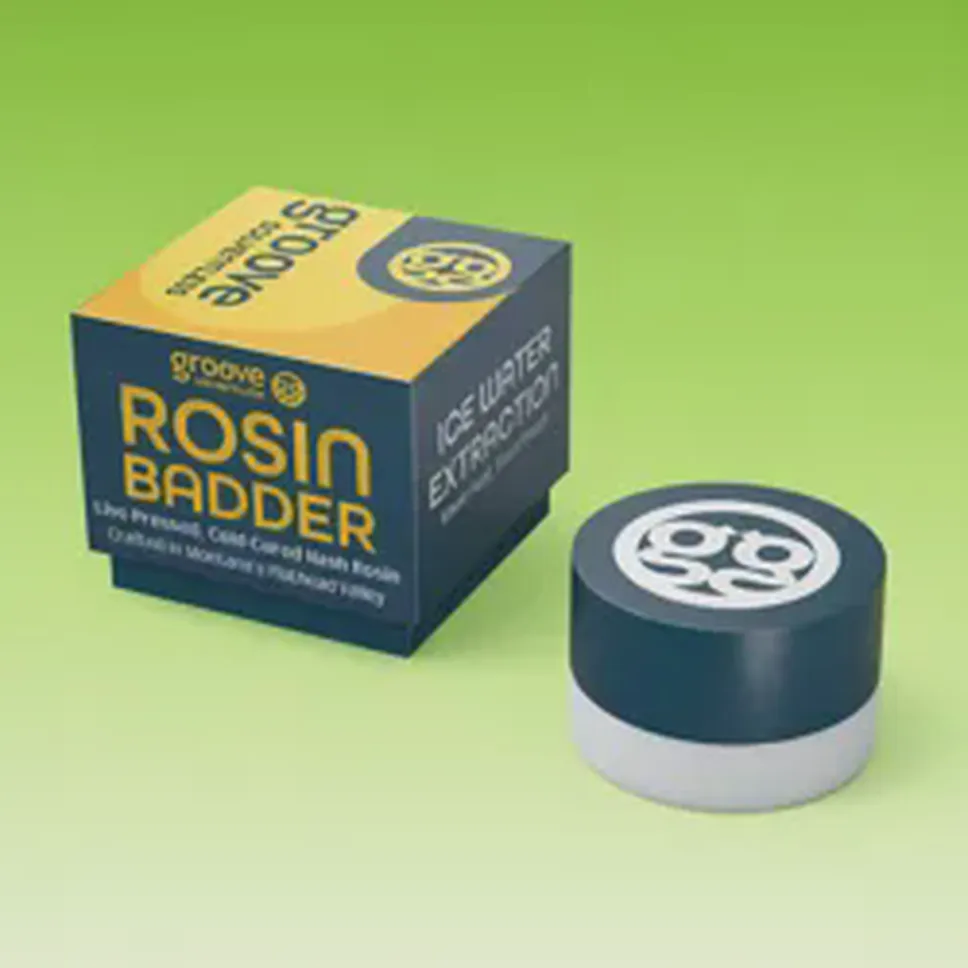
Product Featured: Groove Solventless - Rosin Badder - Honey Banana
Live rosin, on the other hand, is a solventless concentrate. Instead of chemical solvents, it uses heat and pressure to extract resin from fresh-frozen cannabis that has first been processed into bubble hash.
The process typically involves two steps:
- Fresh-frozen cannabis is turned into ice water hash (bubble hash).
- The hash is then pressed with heat and pressure to produce live rosin.
Because of the extra labor and high-quality input required, live rosin often appears in smaller batches and higher price tiers.
How They Compare
Both concentrates are valued for their terpene-rich profiles, but the main differences usually come down to:
- Extraction method: solvent-based vs solventless
- Production complexity: live rosin requires additional processing steps
- Availability and cost: live rosin is often produced in smaller quantities
For many consumers, choosing between live resin and live rosin comes down to personal preference in flavor, production method, and price, rather than one product being universally better than the other.
How Cannabis Concentrates Are Used
Cannabis concentrates can be consumed in several different ways, depending on the product and the user’s experience level. Some methods are designed for stronger, fast-acting effects, while others focus on convenience and discretion.
Here are the most common ways people use cannabis concentrates.
Dabbing
Dabbing is one of the most well-known ways to consume concentrates. This method involves heating a small amount of concentrate on a hot surface, often called a banger or nail, and inhaling the vapor through a dab rig.
Because concentrates are highly potent, dabbing typically produces fast and intense effects. Many experienced consumers prefer this method because it can deliver strong flavor and powerful results with a small amount of product.
However, beginners usually start with other formats before moving to dabs, since the equipment and potency can require a bit more familiarity.
Vape Cartridges
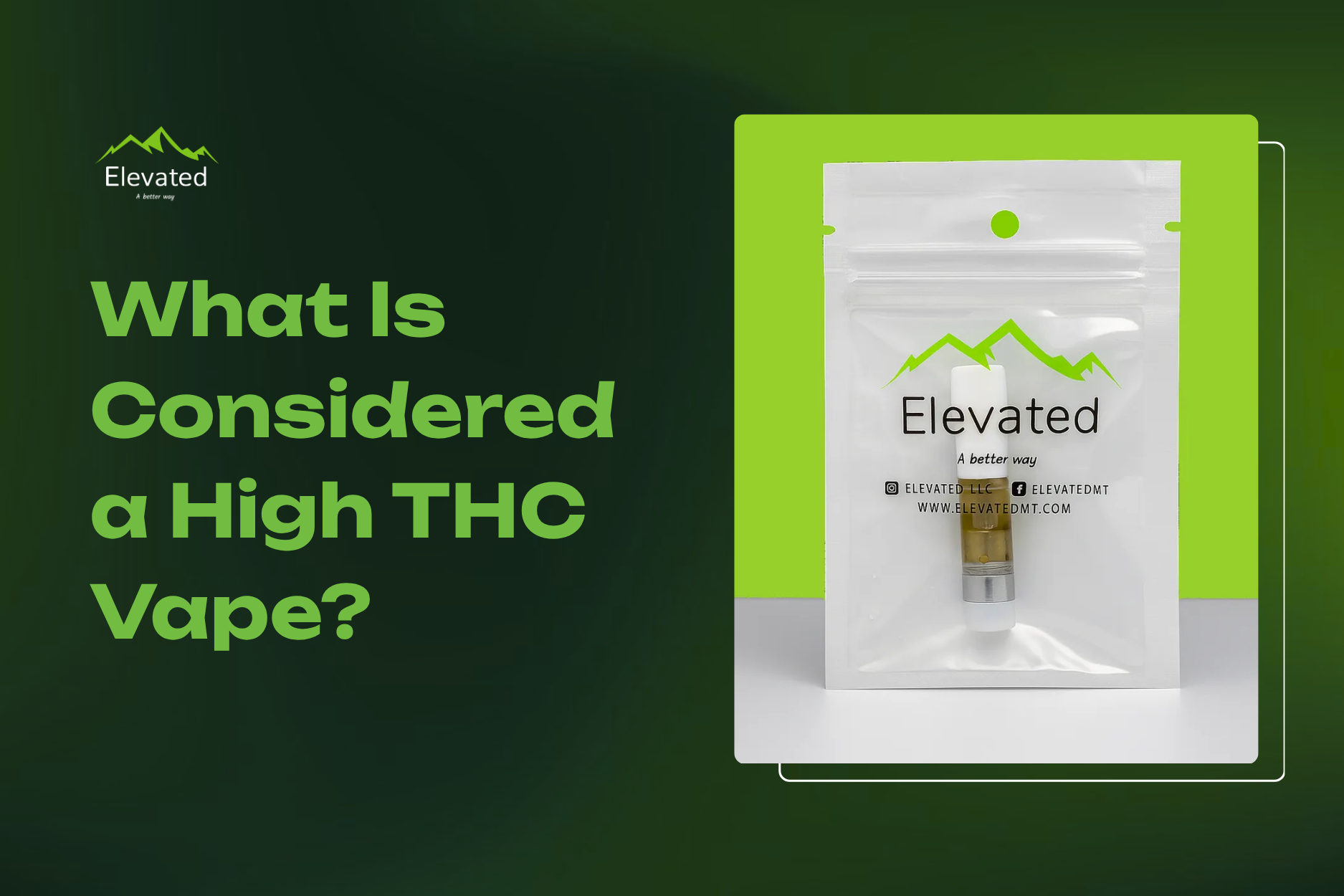
Vape cartridges are one of the most accessible and beginner-friendly ways to use cannabis concentrates. These cartridges contain concentrated cannabis oil and are designed to work with small battery-powered vaporizers.
Many people prefer vape carts because they are:
- Easy to use
- Portable
- Discreet
- Consistent in dosing
Cartridges are often made using distillate or live resin extracts, and they are widely used by people who want a convenient way to consume concentrates without specialized equipment.
Edibles and Infused Products
Cannabis concentrates are also commonly used as ingredients in edibles and infused products. In these cases, the concentrate is processed and blended into foods, beverages, or other products to deliver cannabinoids through digestion rather than inhalation.
This approach can provide a longer-lasting experience, though the onset time is slower compared with inhaled concentrates.
Adding Concentrates to Flower
Some people combine concentrates with traditional cannabis flower. Small amounts of wax, crumble, or hash can be added to bowls or joints to increase potency and flavor.
This method is sometimes used by people who enjoy smoking flower but want to enhance the overall experience with a small amount of concentrate.
Because cannabis concentrates are significantly more potent than flower, most experienced consumers recommend starting with small amounts and gradually adjusting to find a comfortable level.
Common Mistakes People Make With Cannabis Concentrates
Because cannabis concentrates are much more potent than traditional flower, new users sometimes make a few predictable mistakes when first exploring the category. Understanding these early can help create a safer and more enjoyable experience.
Chasing the Highest THC Percentage
One of the most common misconceptions is that higher THC automatically means better cannabis. While potency plays a role, it doesn’t tell the whole story. The balance of cannabinoids and terpenes often has a major influence on flavor, aroma, and overall experience.
Many knowledgeable cannabis professionals encourage consumers to look beyond THC alone and consider the full profile of the product.
Taking Too Much Too Quickly
Because concentrates contain higher cannabinoid concentrations, it’s easy to use more than intended. A small amount can produce noticeable effects, especially for people with lower tolerance.
This is why many experienced users recommend starting with a very small amount and waiting to see how it feels before using more.
Assuming Solventless Always Means Better
Solventless concentrates like rosin or bubble hash are often popular among enthusiasts, but that doesn’t mean solvent-based concentrates are automatically lower quality. Modern extraction facilities use controlled processes and testing standards that can produce clean, terpene-rich products.
The quality of the starting material and the skill of the extraction team often matter more than the extraction label alone.
Ignoring Texture and Ease of Use
Another mistake beginners make is choosing concentrates based only on name recognition without considering how easy the product is to handle. For example, brittle textures like shatter can be harder to portion, while softer concentrates like wax or budder are often easier to work with.
Ready to Explore Cannabis Concentrates?

Now that you understand what cannabis concentrates are and how they work, the next step is finding the right product for your experience level and goals. Many people feel overwhelmed by the number of options or worry about choosing something too strong, but the right guidance makes all the difference.
If you're curious about concentrates and want a reliable place to start, Elevated focuses on high-quality, Montana-grown cannabis paired with an educational, customer-first approach. Instead of pushing the highest THC products, the focus is on helping you find what actually fits your preferences.
At Elevated, you can explore a wide range of concentrates, from terpene-rich live resin to solventless options and other refined extracts, all produced with consistency and quality in mind. If you're new, vape cartridges offer a more approachable entry point with discreet use and controlled dosing. And if you're unsure where to begin, talking with a knowledgeable budtender can make the entire process feel simple and personalized.
Whether you're trying concentrates for the first time or refining what you already like, stop by your nearest Elevated location and get guidance that helps you choose with confidence.
Disclaimer
The information provided in this article is for educational and informational purposes only and should not be considered medical, legal, or professional advice. Cannabis affects individuals differently depending on factors such as tolerance, body chemistry, and product potency.
Cannabis concentrates can contain significantly higher levels of cannabinoids than traditional cannabis flower. Individuals who are new to cannabis or concentrates should consider starting with small amounts and adjusting gradually based on their comfort level.
Always purchase cannabis products from licensed and regulated dispensaries that follow proper testing and safety standards. Laws and regulations surrounding cannabis vary by location, so consumers should follow the regulations applicable in their jurisdiction.
If you have questions about how cannabis may affect your health, consult a qualified healthcare professional.
References
- National Institute on Drug Abuse (NIDA)
Marijuana Concentrates
https://nida.nih.gov/publications/drugfacts/marijuana-concentrates - Weedmaps Learn
Cannabis Concentrates and How to Consume Them
https://weedmaps.com/learn/products-and-how-to-consume/cannabis-concentrates - Wikipedia
Cannabis Concentrate
https://en.wikipedia.org/wiki/Cannabis_concentrate - First Nations Health Authority
What You Need to Know About Cannabis Concentrates
https://www.fnha.ca/Documents/FNHA-What-You-Need-to-Know-About-Cannabis-Concentrates.pdf
Agropharm
10 Types of Cannabis Concentrates and Their Effects
https://agropharm.com/blog/10-cannabis-concentrates
Recent Posts