CBD for Sleep: Effectiveness, Dosage, Timing, and Formats
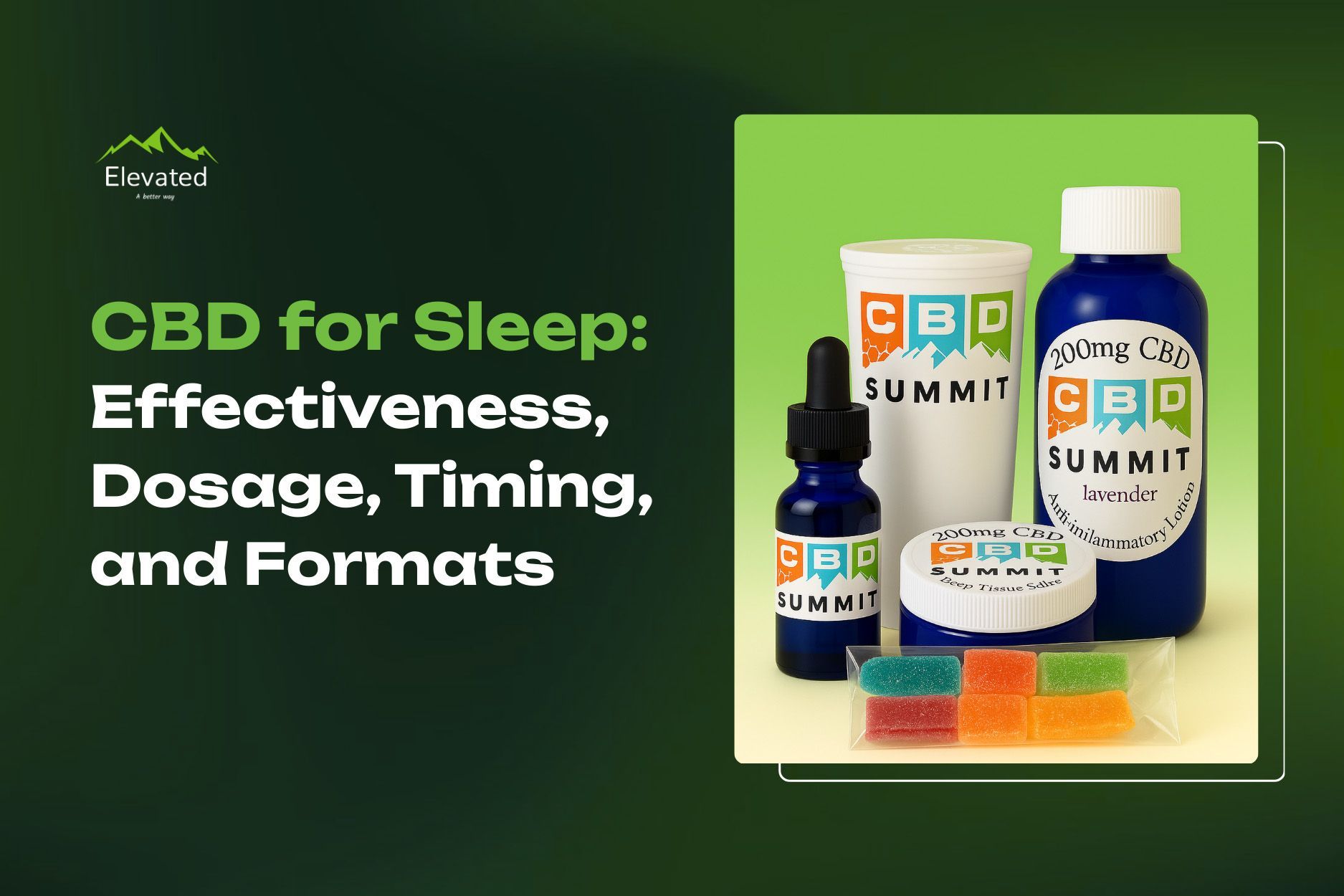
CBD may help improve sleep by easing anxiety, reducing pain, and supporting circadian balance. Research shows mixed but encouraging results, especially for people with stress or chronic discomfort. Hemp-derived CBD is non-intoxicating and widely available legally in Montana.
The New Era of Natural Sleep Support
Across the United States, and especially here in Montana, sleeplessness has quietly become a public health issue. Long work hours, constant screen exposure, and everyday stress have pushed more people to look for natural relief.
As traditional sleep aids lose favor, cannabinoids have taken their place in the national conversation. CBD, in particular, has earned attention for supporting rest without the intoxication or dependency risks that come with stronger medications.
What makes CBD so appealing is its balance of safety and versatility. It interacts with the body’s endocannabinoid system to help regulate mood, pain, and inflammation, which are all connected to sleep quality. Many people begin using CBD for rest but quickly notice broader improvements such as:
- Eased anxiety and mental tension that often delay sleep onset.
- Relief from lingering pain that disrupts deep rest cycles.
- Faster muscle recovery for workers, athletes, and anyone living an active Montana lifestyle.
As cannabis industry professionals, we view CBD as part of a larger movement toward
plant-based wellness rooted in science and transparency. Every product from Elevated Montana and every recommendation we make is guided by compliance, testing, and the kind of firsthand experience that only comes from working with the plant daily.
In the sections ahead, we will explore what research reveals about CBD and sleep, how to select the right form and spectrum, what dosage works best, and which Elevated products our team stands behind for consistent nighttime relief.
What Should You Know About CBD
Before exploring CBD’s role in relaxation, it helps to understand what it actually is. Cannabidiol, or CBD, is one of more than a hundred compounds found in the cannabis plant. It’s legal to sell in Montana when derived from hemp containing less than 0.3 percent THC.
Although the industry has grown rapidly, reliable information still matters. Knowing how CBD works and how it’s produced separates trusted wellness products from the flood of mislabeled or low-quality options on the market.

The Science Behind Cannabidiol
CBD works through the body’s endocannabinoid system, a network of receptors and neurotransmitters that helps maintain internal balance. These receptors influence mood, inflammation, and the stress response.
When CBD binds to them, it encourages the body to regulate itself more efficiently instead of forcing a single effect. That’s why users often describe CBD as “subtle but steady.”
Unlike THC, CBD does not alter perception or cause intoxication. According to the World Health Organization, pure CBD shows no evidence of abuse or dependence potential. It interacts with serotonin and GABA pathways that influence calm and focus but leaves cognition and coordination intact.
This distinction is why CBD products can be sold over the counter while THC remains regulated under state cannabis programs.
From Hemp Farm to Nightstand
The quality of CBD begins long before extraction. In Montana, hemp is cultivated in clean soil under strict compliance standards, ensuring each plant stays below the federal THC limit.
After harvest, the flowers are dried and processed to extract cannabinoids using food-grade solvents or CO₂ technology. The resulting oil is refined, filtered, and blended into tinctures, edibles, or topicals.
Every reputable producer provides certificates of analysis from accredited labs verifying potency and purity. The U.S. Food and Drug Administration warns that many retail CBD items still fail basic testing for accuracy or contaminants.
Elevated Montana addresses that gap through in-house oversight, local partnerships, and open lab results on every batch.
From Hemp Farm to Nightstand
The quality of CBD begins long before extraction. In Montana, hemp is cultivated in clean soil under strict compliance standards, ensuring each plant stays below the federal THC limit.
After harvest, the flowers are dried and processed to extract cannabinoids using food-grade solvents or CO₂ technology. The resulting oil is refined, filtered, and blended into tinctures, edibles, or topicals.
Every reputable producer provides certificates of analysis from accredited labs verifying potency and purity. The U.S. Food and Drug Administration warns that many retail CBD items still fail basic testing for accuracy or contaminants.
Elevated Montana addresses that gap through in-house oversight, local partnerships, and open lab results on every batch.
Everyday Scenarios Where CBD Helps
CBD fits easily into daily life because it supports natural processes rather than masking symptoms. Many Elevated customers use it to:
- Ease pre-sleep tension and quiet a restless mind after demanding days.
- Relieve sore muscles following outdoor work, training, or recreation.
- Promote calm evening routines that prepare the body for consistent rest.
These benefits align with broader findings from the
Substance Abuse and Mental Health Services Administration, which notes CBD’s potential in supporting relaxation and stress management when used responsibly.
Can CBD Really Help You Sleep?
Sleep is one of the first areas where people notice the broader potential of cannabinoids. For years, research focused almost entirely on THC, but attention has shifted toward CBD as people look for calmer rest without intoxication.
The latest studies point to measurable yet nuanced results.
CBD seems to support the body’s sleep rhythm by easing mental overstimulation and moderating stress chemistry, rather than inducing sedation. It works with biological systems that already manage rest, recovery, and alertness.
How CBD Interacts with Sleep Pathways
CBD engages several biological systems tied to sleep regulation. It influences serotonin and GABA receptors that quiet neural activity and reduce anxiety before rest. Through these pathways, CBD promotes a state of calm that allows sleep to occur more naturally.
CBD also appears to regulate cortisol, the hormone that spikes with stress and can trigger early waking. By moderating cortisol levels, the body stays longer in restorative phases of sleep.
Research suggests CBD may also help stabilize circadian rhythm through its effect on endocannabinoid receptors that signal wake and rest cycles, providing steady balance rather than direct sedation.
What Current Research Shows
A systematic review of cannabinoid therapies found consistent reductions in sleep latency and fewer night awakenings among participants whose insomnia was linked to anxiety. CBD’s ability to reduce hyperarousal appears to be a key contributor.
For otherwise healthy sleepers, outcomes are more variable. Some trials demonstrate modest increases in total sleep time, while others show no measurable difference. Across nearly all studies, participants describe an easier transition into rest, suggesting CBD’s main benefit lies in relaxation rather than sedation.
Survey data from a large-scale observational study reflect the same pattern: users report smoother returns to sleep after middle-of-the-night wakeups and improved overall rest quality. These results mirror feedback Elevated Montana receives from customers who use low to moderate nightly doses.
Who Sees the Most Benefit
Those most likely to experience significant improvement are individuals whose sleep struggles stem from anxiety, chronic pain, PTSD, or high-stress work cycles. Evidence from a meta-analysis of cannabinoid research indicates that regulating these underlying conditions improves REM and non-REM consistency.
Healthy users who occasionally feel restless can still benefit from CBD’s ability to reduce tension and smooth the mental transition into sleep. In all groups, results depend on product purity, consistent timing, and responsible dosing.
Comparison Table — CBD vs Other Sleep Aids
Practically every type of traditional sleep pill has some downsides, which is exactly why there is so much excitement about the potential of CBD-based products. Here is a direct comparison of the pros and cons of the most commonly used sleep aids.
| Sleep Aid | Benefits | Drawbacks | Best For |
|---|---|---|---|
| CBD | Calms nerves, reduces pain, low side effects | Variable efficacy, quality differs | Stress or pain-related insomnia |
| Melatonin | Supports circadian rhythm | Grogginess, vivid dreams | Jet lag, irregular schedules |
| Sedatives (Rx) | Fast onset | Dependence, tolerance | Severe insomnia, short-term use |
| THC | Sedating relaxation | Psychoactive, tolerance risk | Experienced users, pain-related sleep loss |
Choosing the Right CBD Product for Sleep
When customers ask about sleep, what they really want is consistency. They want something that takes the edge off the day and helps them stay asleep without feeling groggy the next morning.
The key is choosing a CBD product that fits how your body processes cannabinoids and how you like to wind down at night.
Full Spectrum vs Isolate vs Broad Spectrum
Every CBD extract has its own character. Full-spectrum oil contains the entire range of cannabinoids, terpenes, and flavonoids that occur naturally in the hemp plant.
These compounds work together through what researchers describe as the entourage effect, which can create a smoother and more balanced experience.
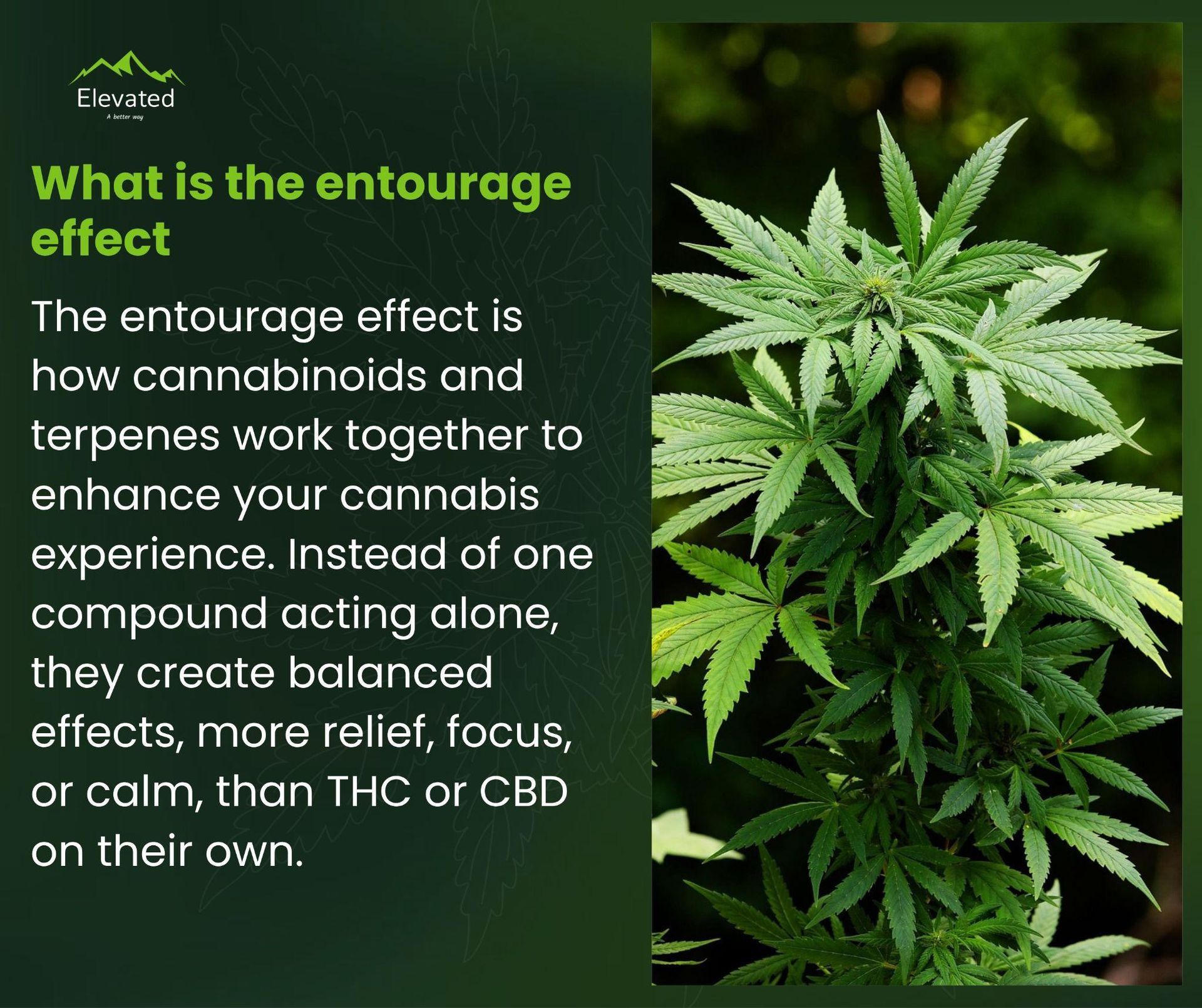
Broad-spectrum CBD keeps most of those compounds but removes measurable THC. It suits anyone who prefers a THC-free option or works in an environment where testing is a concern.
CBD isolate is the pure form of cannabidiol with no other active cannabinoids. It offers precision and peace of mind for users who want complete control over what goes into their system.
There is also some confusion online about “distillate” versus “isolate.” Distillate is a concentrated oil that still contains minor cannabinoids, while isolate is cannabidiol in its single-molecule form.
Forms of CBD for Nighttime Use
Different delivery methods affect how quickly CBD takes effect and how long it lasts. Elevated offers several options that align with different nighttime needs and preferences.
Gummies: Slow, Steady, and Delicious
Gummies absorb through digestion and release cannabinoids over several hours. This slower onset supports sustained calm throughout the night.
Recommended Product: Altitude Labs CBD Gummies
Made in Elevated’s own bakery using Montana-grown hemp, these gummies are lab-tested for potency and purity, giving users steady, reliable results.
Tinctures: Quick and Customizable
Tinctures absorb under the tongue and begin working within about forty-five minutes. They allow easy adjustment of timing and dosage for a personalized experience.
Recommended Product: CBD Tincture Cherry
A clean, naturally flavored extract derived from Montana-grown hemp, ideal for consistent nightly use.
Topicals: Targeted Relaxation
Topicals provide focused relief for localized discomfort such as sore muscles or joint tension that can interfere with rest.
Recommended Product: CBD Lotion Cucumber Mint
This fast-absorbing formula combines cooling botanicals with locally extracted cannabinoids to ease surface tension before bed.
How They Work Together
CBD and THC connect to the body’s endocannabinoid network in complementary ways. THC binds directly to CB1 receptors in the brain and nervous system, producing physical relaxation and relief from pain. CBD influences those same receptors indirectly, softening THC’s psychoactive edge while extending the sense of calm. Together, they produce a steady synergy that eases the body into rest instead of pushing it toward sedation.
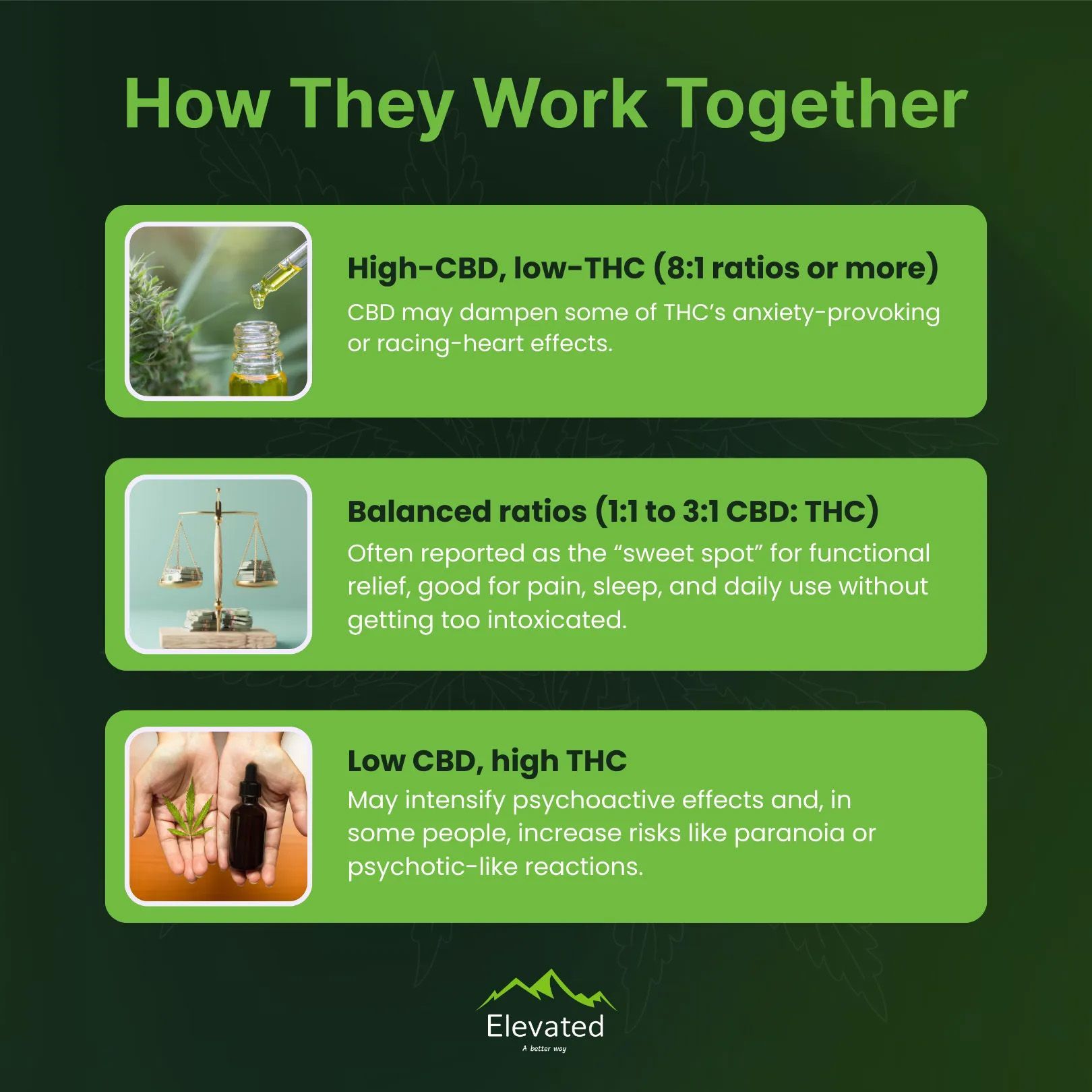
Recent research suggests that balanced cannabinoid profiles may help shorten the time it takes to fall asleep and maintain deeper stages of sleep in individuals managing stress, inflammation, or chronic discomfort.
The key is moderation. A thoughtful ratio provides the benefits of both cannabinoids without overwhelming the system or impairing clarity the next morning.
Watch for Possible Side Effects
While most users tolerate balanced THC and CBD products well, everyone’s chemistry is unique. Starting with a lower dose and increasing gradually is the most reliable way to find your comfort range. Common, usually temporary effects include:
- Next-day grogginess when using products with elevated CBN or higher THC content.
- Dry mouth or mild dizziness, particularly in first-time users.
Elevated budtenders are trained to help customers navigate these reactions and refine timing, product type, and dosage for smoother experiences.
Formats to Try
Different delivery methods determine how quickly cannabinoids take effect and how long the calm lasts. Elevated carries locally crafted options designed for dependable nighttime use.
Flower
A slower evening ritual that allows measured inhalation and quick onset. Many Indica-leaning strains contain terpenes such as myrcene and linalool, known for promoting calm.
Try: Huckleberry Web (THC 7%, CBD 12%)
A Montana-grown hybrid offering balanced tranquility with a clear head, ideal for easing the transition from evening activity to rest.
Gummies / Edibles
Edibles release cannabinoids gradually, supporting steady relaxation across the night. Balanced ratios minimize intensity while maintaining body comfort.
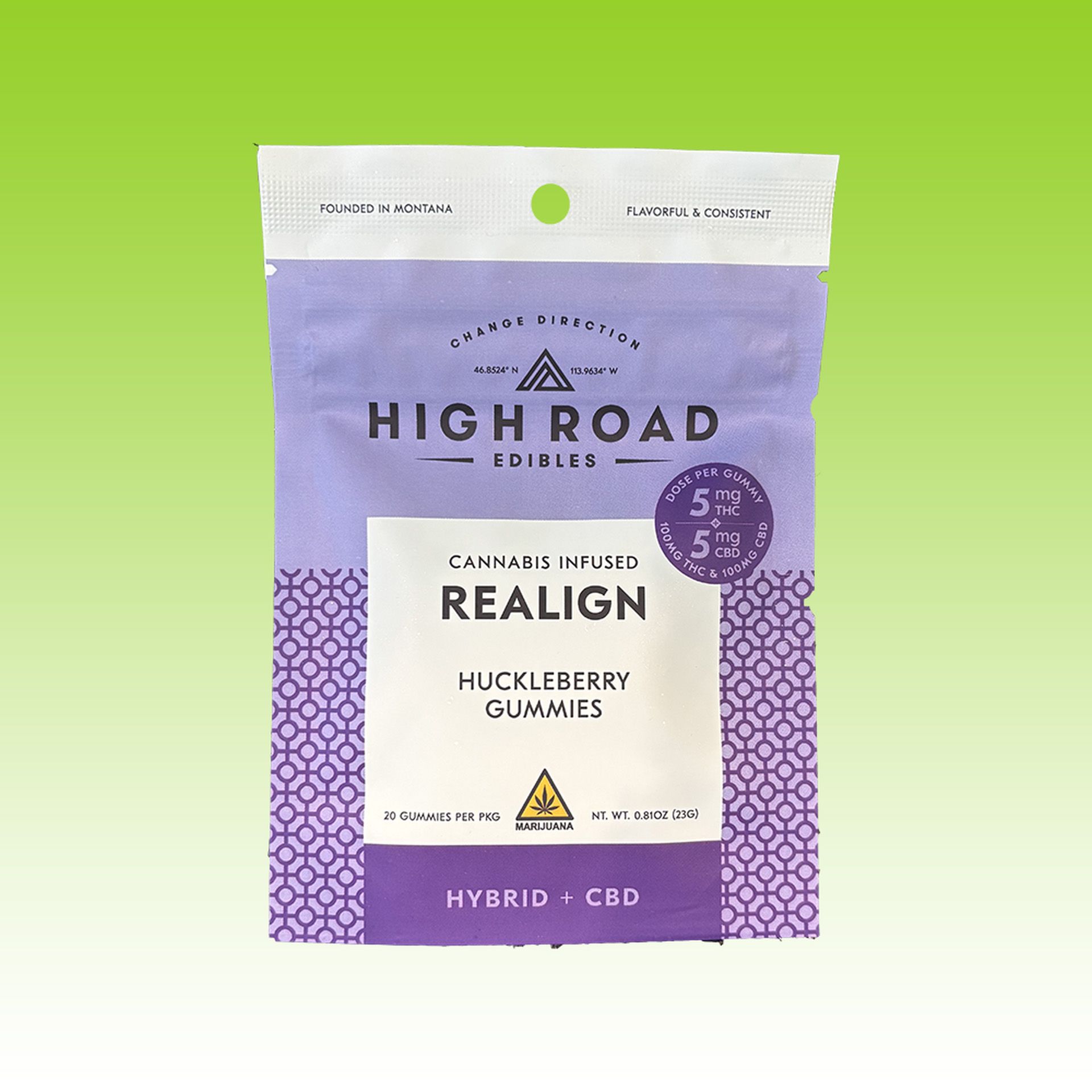
Try: High Road Gummies Realign Huckleberry Hybrid CBD 20 pcs
A precise 1:1 THC:CBD formulation handcrafted in Elevated’s bakery for long-lasting, gentle relief and consistent dosing verified by third-party lab results.
How Much CBD Should You Take for Sleep
Once you’ve chosen the right product, the next question is dosage. The right amount of CBD isn’t a fixed number; it depends on your body, the product you’re using, and what kind of rest you’re hoping to achieve.
Elevated’s team always emphasizes the same principle: start low, go slow, and track how you feel. CBD builds gradually, and consistency matters more than intensity.
Starting and Adjusting Your Dose
Most people respond well to small, measured beginnings. A typical starting range for sleep support is 5 to 10 milligrams per night. Take that amount for several nights before making changes. If you’re still waking up often or feeling restless, increase your dose slightly and continue observing for several days.
Patience is key. CBD doesn’t force sleep the way sedatives do; it helps regulate the processes that allow the body to rest naturally. Because of that, results often become more noticeable after a week or two of regular use.
Keeping a steady schedule helps the cannabinoids build up in your system and interact more efficiently with your endocannabinoid network.
Factors Affecting Dosage
Your ideal dose depends on how your body processes cannabinoids and what is interfering with your sleep. The following elements have the greatest influence:
- Body weight and metabolism — Larger body mass and faster metabolism can require slightly higher doses for the same effect.
- Product type — Tinctures act faster and may need smaller amounts, while edibles last longer but take more time to show results.
- Severity of anxiety, pain, or stress — The stronger the underlying issue, the more support you might need for full relief.
- Experience level — New users often feel stronger effects from smaller amounts compared to regular users.
Timing and Tolerance
CBD works best when taken 60 to 90 minutes before bed, allowing your body to absorb and process it before you settle down. Some users notice a phenomenon called reverse tolerance, meaning they need less over time as their system becomes more responsive to cannabinoids.
Keeping a short sleep journal can help fine-tune your dosage and timing. Note when you take CBD, how much you use, how long it takes to feel relaxed, and how you feel in the morning.
What to Expect When You Take CBD
Most people find CBD easy to integrate into their nightly routine, but realistic expectations make all the difference. It’s not a sedative or a knockout pill; instead, it supports balance across the body’s systems that influence stress, mood, and rest.
Here’s what you can expect as you get started:
- Safety: CBD is generally well-tolerated. Mild effects such as dry mouth or slight drowsiness can occur, but they’re usually temporary. If you take prescription medication, speak with your healthcare provider to rule out potential interactions.
- Drug Testing: Those subject to testing should choose THC-free isolate products to avoid trace levels that can appear in full-spectrum formulas. Elevated’s labeling makes this distinction clear.
- Grogginess: If you wake up sluggish, reduce your dosage slightly or take it earlier in the evening to allow more time for metabolization.
- Effectiveness: Research results are mixed, but real-world users consistently report calmer nights and less anxiety-driven insomnia.
- Quality Control: Always confirm a product’s Certificate of Analysis. Elevated provides batch-specific lab results online and in-store, ensuring accuracy and transparency every step of the way.
CBD Might Be Worth a Try If You Need Some Sleep
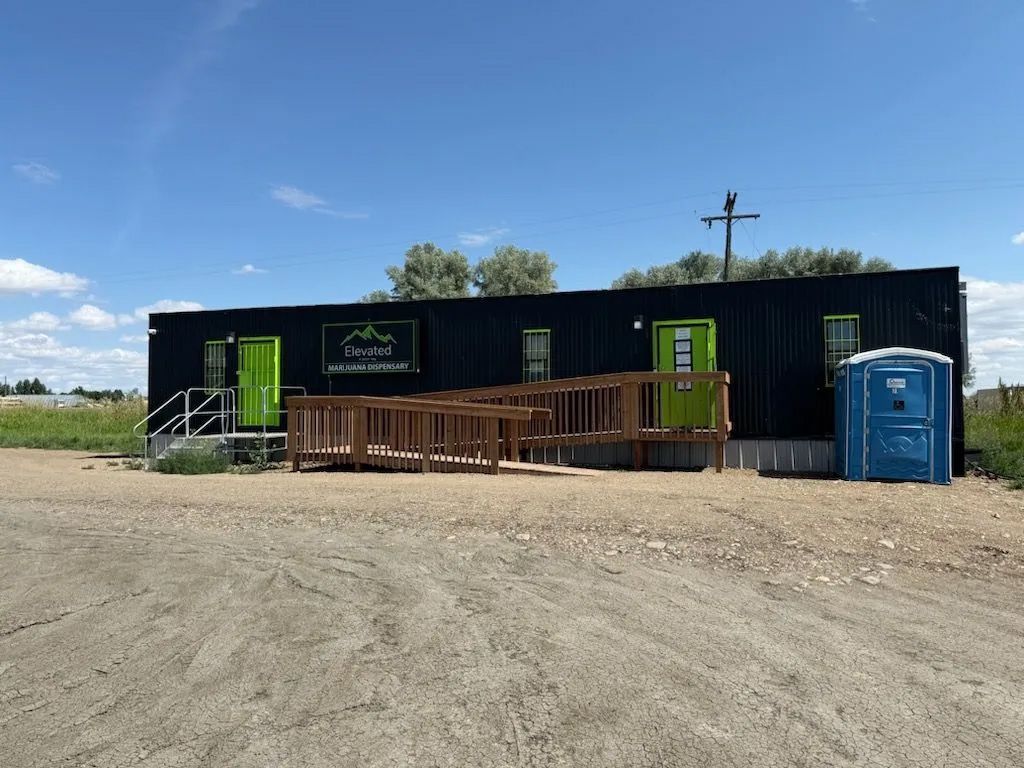
Insomnia and other sleep problems can be devastating if they are left unchecked. The trouble is, medications that help you fall asleep often carry significant side effects and can be both harmful and addictive.
In contrast, CBD is very safe and non-psychoactive. It has a mild touch, but for many people it makes a difference between a sleepless night and healthy rest.
To get the best CBD experience with zero risk of a failed drug test due to impurities, you should trust the supply to real professionals.
Visit your nearest Elevated Montana location or chat with a budtender today to discover your personalized CBD-for-sleep routine.
References:
Grunstein, R. R., Lavender, I., Garden, G., Yee, B. J., & Hoyos, C. M. (2024). Using cannabis and CBD to sleep: An updated review. Current Psychiatry Reports, 26(8), 712–727.
Suraev, A. S., Marshall, N. S., Vandrey, R., McCartney, D., Benson, M. J., McGregor, I. S., & Grunstein, R. R. (2020). Cannabinoid therapies in the management of sleep disorders: A systematic review of preclinical and clinical studies. Sleep Medicine Reviews, 53, 101339.
Stueber, A., & Cuttler, C. (2023). A large-scale survey of cannabis use for sleep: Preferred products and perceived effects in comparison to over-the-counter and prescription sleep aids. Exploration of Medicine, 4, 709–719.
U.S. Food and Drug Administration. (2020, March 5). What you need to know (and what we’re working to find out) about products containing cannabis or cannabis-derived compounds, including CBD. Silver Spring, MD: Author.
World Health Organization. (2017, December 19). Drugs (psychoactive): Cannabidiol (compound of cannabis). Geneva, Switzerland: Author.
Substance Abuse and Mental Health Services Administration. (2023). Cannabidiol (CBD): Potential harms, side effects, and unknowns (Publication No. PEP22-06-04-003). Rockville, MD: National Mental Health and Substance Use Policy Laboratory.
Congressional Research Service. (2020). Regulation of marijuana and hemp CBD (CRS Report No. R46189). Washington, DC: Library of Congress.
Disclaimer
The information provided in this blog is for educational purposes only and is not intended as medical advice, diagnosis, or treatment. Cannabis affects everyone differently, and individual results may vary. Always consult a licensed healthcare provider before using cannabis products, especially if you have a medical condition, are pregnant or nursing, or are taking prescription medications.
All cannabis products sold by Elevated are tested by state-licensed Montana laboratories for quality and compliance. Must be 21+ to purchase recreational cannabis, or a registered cardholder for medical products. Consume responsibly and in accordance with Montana state laws.
Serving with Integrity, Healing with Intention

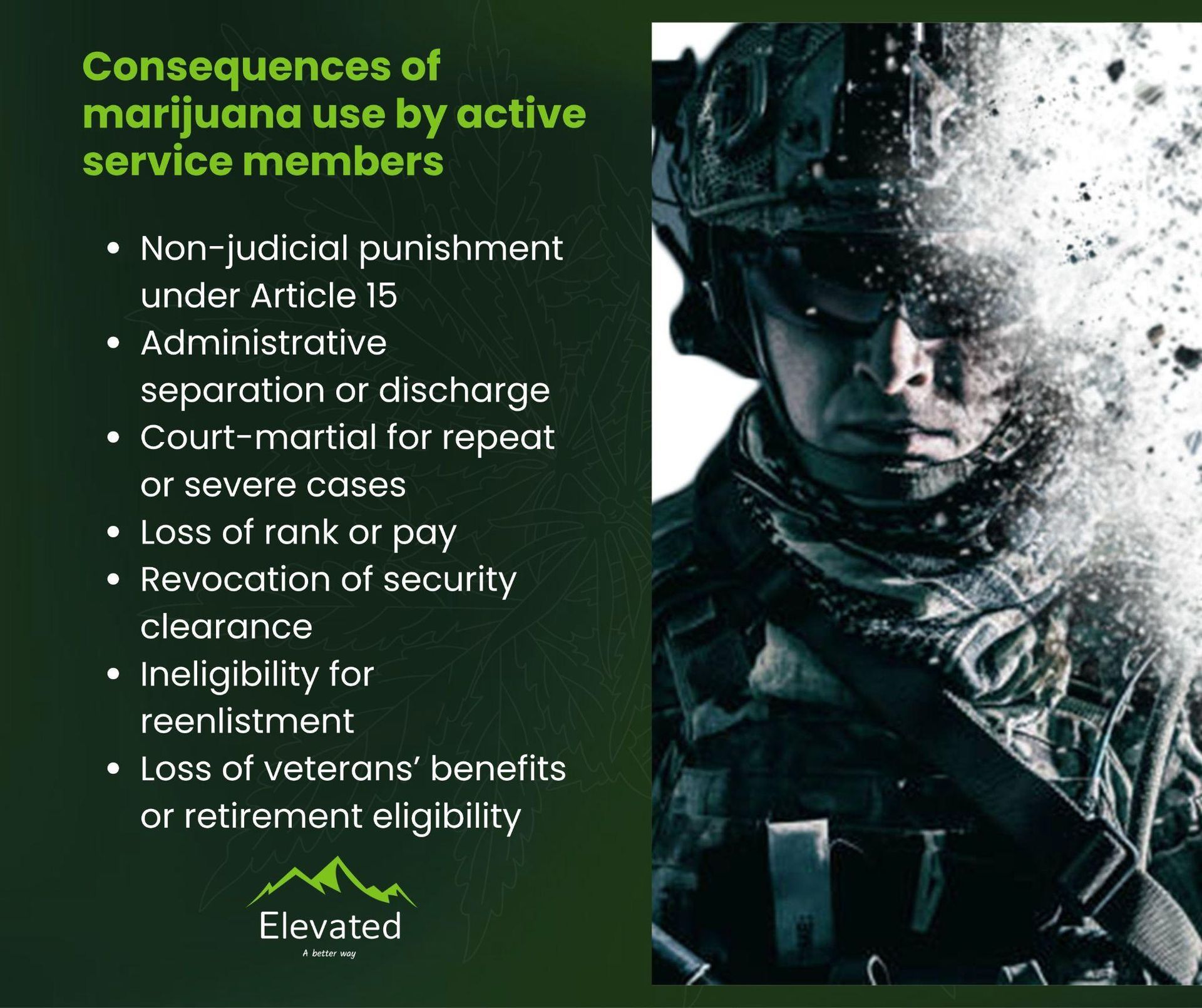
For now, the U.S. military draws a hard line: no marijuana, no exceptions. But for veterans who’ve traded uniforms for healing, cannabis offers a legal path to wellness. This is an option that deserves to be explored with an open mind, disregarding the negative connotations once associated with this plant.
Of course, veterans are dedicated to upholding the US laws and they will consider only fully legal options. Companies like Elevated Montana are 100% compliant with state regulations for cannabis products and we offer only safe, tested products with certified content.
Visit your local Elevated dispensary to learn how our Montana-grown products can support rest, recovery, and relief for those who gave their all for the freedom and prosperity of our proud country.
References
Department of Defense. (2012, September 13). DoDI 1010.01: Military personnel drug abuse testing program (MPDATP). Washington, DC: U.S. Department of Defense.
Department of the Air Force. (2023, September 5). DAFMAN 44-197: Military drug demand reduction program (Interim Change). Washington, DC: Department of the Air Force.
U.S. Department of Veterans Affairs, National Center for PTSD. (2025). Cannabis use and PTSD among veterans. Washington, DC: U.S. Department of Veterans Affairs.
U.S. Food and Drug Administration. (2025). Epidiolex (cannabidiol) oral solution: Highlights of prescribing information. Silver Spring, MD: U.S. Food and Drug Administration.
United States Code. (2025). 10 U.S.C. § 912a: Article 112a. Wrongful use, possession, etc., of controlled substances. Washington, DC: U.S. Government Publishing Office.
Wolfgang, A. S., & Hoge, C. W. (2023). Cannabis and cannabinoids for pain and posttraumatic stress disorder in military personnel and veterans. JAMA Psychiatry, 80(9), 869–870.
Nacasch, N., Avni, C., & Toren, P. (2023). Medical cannabis for treatment-resistant combat PTSD. Frontiers in Psychiatry, 13, 1014630.
Recent Posts